
Best practices for effectively communicating your STR’s sustainability efforts
Crafting clear messages to showcase your sustainability practices confidently
We all recognise the critical importance of sustainability. Consumer demand for greener practices is surging, with a substantial 75% of travellers expressing a desire to adopt more sustainable travel habits over the next year (Booking.com 2024 Sustainable Travel Report). This is largely motivated by a genuine belief that it’s the right thing to do—32% cite this as their main driver. Our industry is responding; sustainability certifications like Sustonica and QALIA, along with awards such as the Shortyz, are increasingly geared towards sustainability in short-term rentals. Regulations are also catching up, with new EU rules seeking greater transparency in STRs and promoting more sustainable tourism practices.
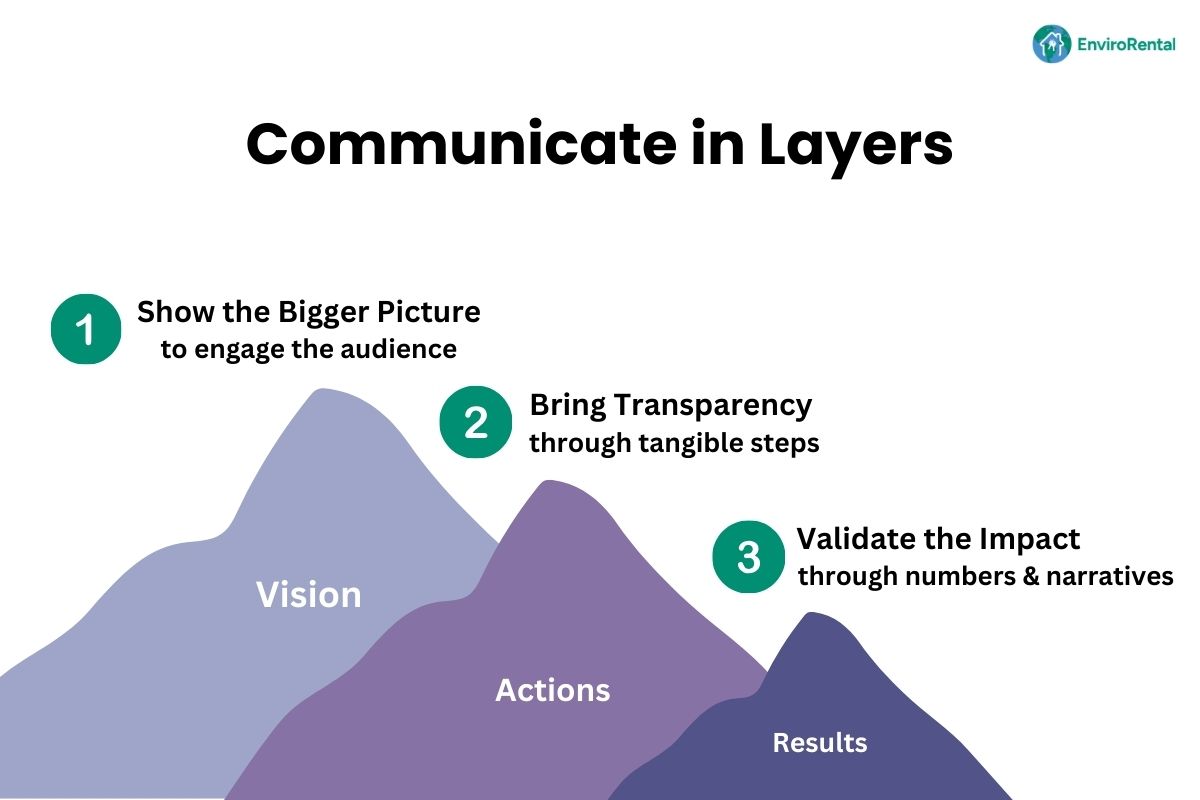
For property managers and owners who are just beginning to communicate their sustainability initiatives, whether these are minor or major, or even if you’re just planning to start, here are a few pointers that might help. These tips are applicable whether you’re updating your website, enhancing your social media presence, or refining your sales decks. Let’s explore how to communicate about sustainability effectively, focusing on vision, actions, and results.
Communicating your sustainability vision

It’s about showing the bigger picture to engage your audience effectively. Here’s how you can structure your approach:
1. Ambitious yet achievable
Avoid overcommitting and under-delivering. Set goals that are challenging but within reach.
2. Timely yet flexible
Stay informed about current issues and trends to ensure your sustainability initiatives remain relevant and adaptable.
3. Alignment with other business goals
Ensure your sustainability efforts support broader business objectives, including financial stability, operational excellence, customer satisfaction, and regulatory compliance.
4. Stakeholder inclusion
Engage all relevant parties, including investors, guests, the local community, and others who might be impacted by your actions.
5. Consistent messaging
Consistency in your communication builds trust and reinforces your commitment to your sustainability goals.
Here’s an example of how you might share news about your STR business’s move towards sustainability certification with your community:
We are thrilled to share our commitment to a more sustainable hospitality experience. Over the next year, we are aiming for all our properties to be certified under Sustonica’s rigorous standards. This isn’t just about a badge; it’s about committing to change. We trust the Sustonica process to help us achieve at least a 20% reduction in our carbon footprint by the end of the year. By embracing these stringent sustainability measures, we aim to enhance guest satisfaction while significantly improving our operational efficiency.
Communicating your sustainability actions

Communicating your sustainability actions effectively means bringing transparency through tangible steps that everyone can understand and appreciate. Here’s how you can ensure your communication hits the mark:
1. Relevant
Ensure each action directly supports and communicates your sustainability vision.
2. Measurable
Use clear, quantifiable metrics to demonstrate the impact of your actions.
3. Communicable
Be open and honest about your initiatives to build trust.
4. Timely
Avoid “Green-Hushing” by being proactive in sharing your sustainability efforts.
5. Ethical
Focus on genuine sustainability wins and steer clear of “Greenwashing.”
Here’s an example of how to communicate a specific sustainability action, like installing smart thermostats, to achieve sustainability certification:
We are excited to announce an important step in our sustainability journey: the installation of smart ResiCentral thermostats across all our properties! This upgrade is more than just a convenience; it’s a strategic move aligned with our goal to secure Sustonica accreditation for each property. These advanced thermostats are expected to reduce energy consumption by 10%, allowing us to offer cost savings and precisely controlled environments, ensuring that our properties are at the perfect temperature upon guest arrival. Truly, a smart move in every sense.
Communicating your sustainability results

Communicating your sustainability results involves validating the impact through both numbers and narratives, effectively showing what you’ve achieved and what you’re striving towards. Here’s a structured way to convey these results:
1. Take a step back
Analyse what worked and what didn’t. Understanding these aspects allows for informed adjustments and planning.
2. Establish a baseline
Set a reference point to measure progress and make comparisons over time.
3. Communicate confidently
Acknowledge imperfections; sustainability is a journey, not a destination.
4. Build narratives
Stories engage your audience and generate trust, making your efforts more relatable and memorable.
5. Take a step forward
Remember that sustainability is an ongoing journey and always look for ways to improve.
Here’s an example of how to communicate about not achieving a goal, such as missing a deadline for a sustainability certification, in a positive and proactive manner:
We set a high goal for ourselves—to achieve Sustonica certification for all our properties. Despite our best efforts, we fell short on two critical parameters. However, we are not discouraged. We’re already making the necessary adjustments and are dedicated to reaching this milestone by the end of next quarter. In our journey toward certification, we’ve successfully reduced our carbon footprint by 10% this year. While it’s shy of our 50% target, it’s progress we’re truly proud of. We are committed to continuous improvement and have plans to bring on a full-time sustainability manager to help us achieve our goals. Stay tuned—we’re on a mission to make a difference!
As we delve into the importance of clear communication in sustainability efforts, it’s crucial to address two prevalent pitfalls: greenwashing and green-hushing. These practices can undermine trust and the integrity of genuine efforts to improve sustainability stewardship.
Understanding Greenwashing

- Emissions offset claims that are not backed by verifiable data.
- Vague or non-specific claims about environmental impact.
- Misleading labels or certifications that are not from accredited bodies.
- Overstating minor improvements as significant environmental achievements.
- Focusing on minor aspects to distract from larger, more damaging practices.
- Irrelevant claims that do not affect the company’s overall sustainability.
Understanding Green-hushing

Conversely, green-hushing is when companies underreport or remain silent about their genuine sustainability efforts. This might be because:
1. Fear of scrutiny
Companies may worry that highlighting their sustainability initiatives will invite a more thorough examination of their practices, which might expose shortcomings.
2. Avoiding accusations of greenwashing
With growing consumer scepticism towards corporate environmental claims, some businesses downplay their real efforts to sidestep potential accusations of greenwashing.
An example of green-hushing could be:
“As the CEO of STRIndia Ltd., I have consistently prioritised integrating sustainable practices into every aspect of our operations. Over the past few years, we have made significant strides. However, we have chosen not to publicise these initiatives widely. My primary concern is the intense scrutiny that often accompanies such announcements. Sustainability is a complex issue, and while we are proud of our progress, we acknowledge that our journey is not complete. We fear that any public focus might highlight the areas where we are still striving to improve, rather than the strides we’ve already made. Furthermore, the increasing scepticism around corporate sustainability claims has influenced our decision. We prefer to avoid the risks of being labelled as engaging in greenwashing. Thus, we focus on doing the work rather than talking about it, ensuring our actions align fully with our values without the added pressure of external expectations.
Mitigating Greenwashing & Green-hushing

To avoid these pitfalls and foster a more transparent and trusting relationship with stakeholders, consider the following strategies:
1. Transparency about practices and goals
Be open about what you are doing and why. This includes the good and the areas needing improvement.
2. Acknowledge imperfections
It’s okay to be imperfect. Sustainability is a journey, and being honest about where you are in that journey can build trust.
3. Start with the low-hanging fruit
Implement easy changes that can have a measurable impact, and communicate these wins clearly.
4. Clear and measurable claims
Ensure all environmental claims are specific, measurable, and verifiable.
Most importantly, take that first step
Start with the basics – quick, affordable actions that you can build on. Find some actions you can take today! Your journey to sustainability doesn’t have to be a sprint; it’s a fulfilling series of strides toward a more responsible future. We at EnviroRental are here to help you at every step of your sustainability progress.
Explore Other Resources:
Let’s not underestimate the power of small changes
We highly recommend checking out our bespoke collection of free EnviroRental resources, crafted exclusively for the STR industry, to help you confidently navigate your next steps towards sustainability.
Explore More EnviroRental Resources

How to get your sustainable vacation rental listed on eco-booking platforms
Make your holiday rental stand out with eco-booking sites: steps, sites & strategy

2025 Booking.com Travel & Sustainability Report
If you run a short-term rental, here’s how this analysis could shape your strategy going forward.

Booking.com 2025 Sustainable Travel Report
Booking.com released the 10th edition of its annual research exploring consumer attitudes and intentions regarding the social and ecological impact of travel