
Accessibility strengthens your sustainability plan
Have you thought about how accessible is your holiday rental?
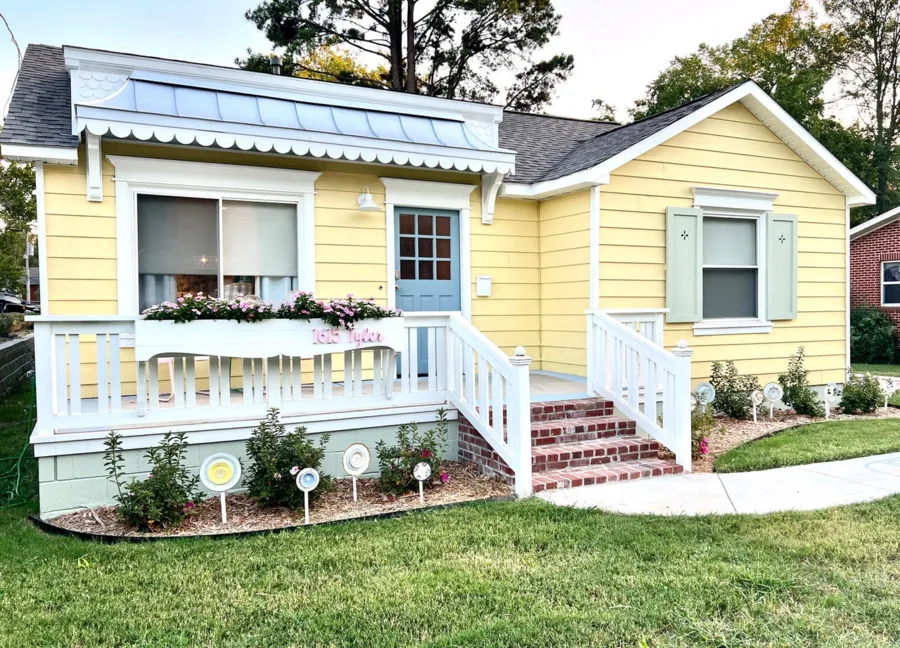
At first glance, it might seem that sustainability and accessibility are two separate considerations. You may have thought about how to make your short-term rental more sustainable or more accessible, but have you considered how the two go together?
We’ve spoken to Lorraine Woodward, CEO and Founder of Becoming rentABLE, to get her expert insights into vacation rental accessibility. Becoming rentABLE advocates for, identifies, and increases the availability of accessible vacation rentals across the USA. Lorraine showed us that accessibility is an important facet of sustainability, and it also just makes good business sense.
If you’re a vacation rental operator who wants to do what’s best for your business, your community, and your planet, then you’re in the right spot. Read on to discover how accessible changes benefit your rental business, and where you can start to make them.
The business benefits of sustainable and accessible vacation rentals
Sustainability and accessibility are intricately linked. A disproportionate number of people with disabilities live in low- and middle-income countries, which are generally more climate vulnerable. In addition, many disaster warning systems, evacuation paths, and temporary shelters are inaccessible.
So, people with disabilities are more likely to experience climate disasters, and less likely to have access to recovery, safety, and suitable support following these disasters. Addressing both sustainability and accessibility in your rental property makes the short-term rental sector more equal, more just, and more valuable for our global community.
And the benefits of sustainability and accessibility go far beyond doing the right thing. There are a number of ways in which incorporating accessibility into your sustainability plan makes great business sense.
Attract a growing market of guests
One of the key ways in which sustainability and accessibility are linked is that they both open your property up to a new (and growing) market of travellers.
16% of the global population experiences a significant disability, and this proportion is likely to increase as people live longer. Becoming rentABLE anticipates that, by 2030, the USA will have 31 million new seniors. Many of these older guests will have some kind of access requirements.
Similarly, the proportion of travellers who prioritise sustainability when making their choice of accommodation has been growing steadily in recent years. 80% of travellers say that travelling more sustainably is important to them, and 43% are even willing to pay more for sustainable options.
Both sustainable and accessible changes will, therefore, increase the appeal of your rental property to a steadily growing group of travellers.
Reinforce your brand values
Your short-term rental brand helps you to attract and retain guests who share your values. Broadcasting your commitment to the planet and to your community is likely to convert guests for whom sustainability and accessibility are a priority. Once they’ve booked, connecting with your guests through shared values leads to more five-star reviews and return visits.
On a practical level, branding your property as accessible (and clearly communicating how it’s accessible) allows your guests with disabilities to know if your property will fit their needs. Accessible vacation rentals are in short supply – they account for just 0.1% of rental properties in the USA – so communicating your accessible features will help you to stand out from the crowd.
Stand out on OTAs
Sustainable and accessible changes will help your OTA (online travel agency, such as Vrbo) listings to shine. Guests who require accessible features will use the OTAs’ filters to find suitable properties. If you appear as one of the properties in the area with detailed information about your accessibility measures, then you’ll immediately stand out to them.
Similarly, Booking.com is continuing to refine its Travel Sustainable badge. It now offers three different levels to reflect the lengths to which accommodation operators are going in order to reduce their environmental impact. Eco-conscious travellers use the Travel Sustainable filter to find accommodation which aligns with their green values.
Many of the OTAs still have a long way to go when it comes to clearly labelling both accessible and sustainable features in short-term rental properties. However, using these filters is a starting point, and they will mark you out to those travellers for whom accessibility and sustainability are key considerations.
Three accessible changes to make to your short-term rental property today
If you’d like to access the benefits of accessibility but you’re not sure where to start, check out these three initial steps recommended by Lorraine:
-
Take Becoming rentABLE’s free accessibility quiz
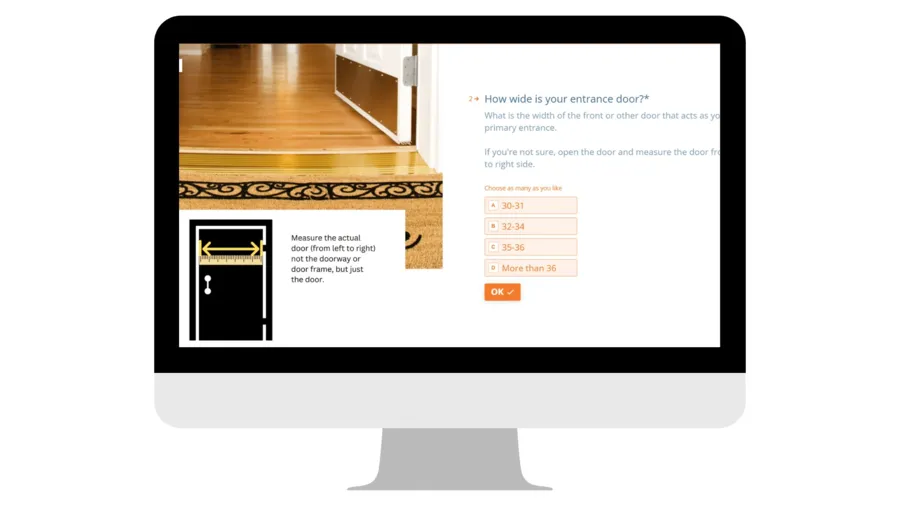
Lorraine highlighted that many vacation rental properties are already more accessible than their operators think. Becoming rentABLE’s free survey gives you feedback on how eligible your property already is for their accreditation.
Becoming rentABLE identifies 43 different elements to an accessible property for mobility. There’s a high chance that you tick more boxes than you realise! Head over to their property search to explore the different features that your property might already include.
-
Revisit your listing photographs
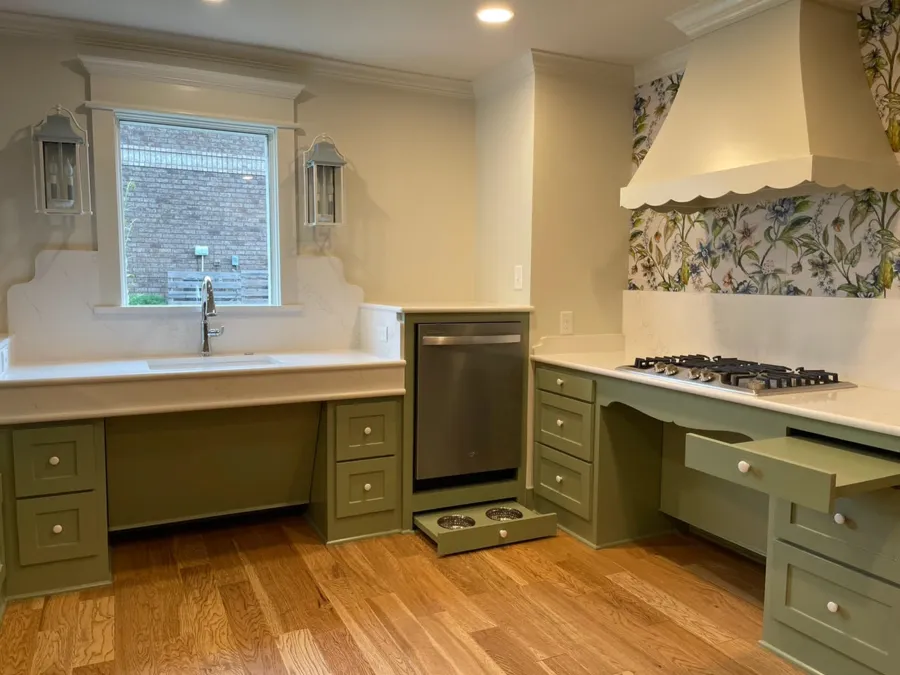
It’s important that guests with disabilities can see exactly what your property looks like so that they know how accessible it will be to them. Whether your photographs are on a listing site, your website, or both, check that they clearly show:
- Your floor space – what material is the floor made of? How much space is there to manoeuvre in a wheelchair or with a walker?
- Your elevator – where and how does it operate? How much space does it have?
- Underneath the beds – is there enough space to use a hoyer lift?
If you list any other features, such as roll-under sinks or an accessible shower room, make sure that your photos show precisely how these are accessible with measurements and clear images. Your guests need to know if they will suit their needs.
-
Review your property description
Once you’ve revisited your photos, it’s time to make sure that your property description complements them by describing your accessibility features in detail. Again, you might not have to make many changes in order to start on this. You may already be able to mention that:
- guests can get into the property from the street without going up any steps
- you have a large, hard-surface driveway that can accommodate a vehicle with a wheelchair ramp
- your interior doors have lever handles rather than doorknobs (making it easier for guests with dexterity issues to open them)
Check out Becoming rentABLE’s examples of accessible features to see how many you can include in your short-term rental description.
How to create sustainable and accessible vacation rentals
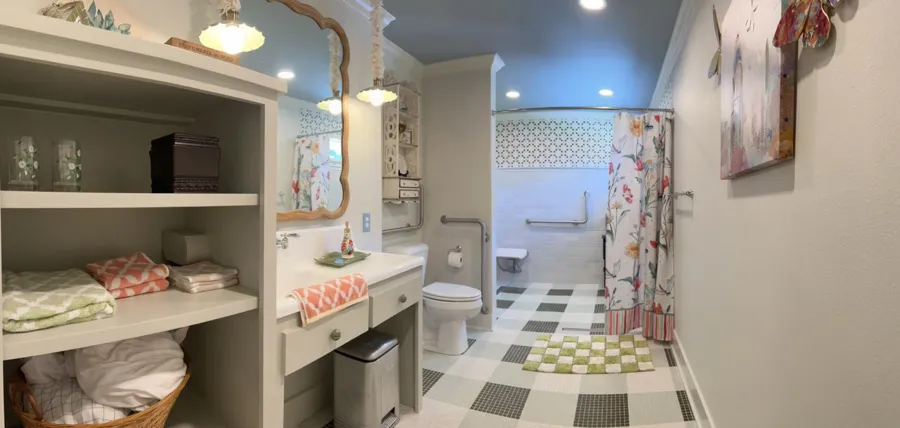
There are sometimes challenges to finding solutions which are both sustainable and accessible. For example, working towards an entirely plastic-free rental property is a brilliant target from a sustainability perspective. However, some guests with conditions which affect their strength and mobility might need plastic crockery and cutlery in order to be able to eat safely.
This certainly doesn’t mean that you have to choose either accessibility or sustainability. In fact, the two intersect so deeply that you can’t separate one from the other. There are simply some scenarios which demonstrate the need to adopt an inclusive approach to sustainability.
There are also scenarios which demonstrate how perfectly solutions can serve both sets of needs. Adopt these simple changes to make your property both more sustainable and more accessible:
Install motion-sensitive lighting
Light switches are often located at a height that’s inaccessible or uncomfortable for wheelchair users. They can also be difficult to locate for those guests who are blind or have low vision. Motion-sensitive lighting eliminates these barriers by switching on and off according to guests’ movement into and out of a room.
In addition, motion sensitive lighting reduces guests’ energy consumption by ensuring that lights are switched off when guests aren’t using a room. This is an effective way to lower your rental business’s carbon emissions without affecting your guests’ experience.
Insulate your short-term rental property
Guests with intellectual and developmental disabilities might be highly sensitive to external stimuli such as temperature changes and noise levels. Proper insulation makes your property more accessible to them by reducing these stimuli and regulating temperature and sound.
Good insulation also maximises the efficiency of your heating and cooling systems, and thereby limits your property’s energy consumption. This reduces your carbon emissions and your heating bill!
Choose natural, unscented cleaning products

Allergies are one of the most common chronic health conditions in the world, with 20% of allergy patients in Europe living with the risk of a life-threatening reaction. Harsh, synthetic cleaning products, laundry detergents, and toiletries can trigger guests’ allergies. At best, this makes their stay less enjoyable. At worst, it could put them in serious danger. The safest option is to choose natural, unscented products wherever possible.
Aggressive cleaning products are also bad for the environment. They contain harsh chemicals that leak into our air, water, and soil, and damage our ecosystems and food chains. Try to choose products which are certified organic or nature-friendly. The good news is that there’s a lot of overlap between products which are good for guests’ health, and products which are good for the environment.
If you’re looking for more detailed guidance on product selection, check out Step 4 in your free Sustainability Roadmap, where we detail the best certifications to look out for.
Continue your journey towards an accessible vacation rental
These strategies are just a starting point. Achieving sustainable accessibility (or accessible sustainability!) doesn’t need to happen overnight. It’s all about taking consistent, manageable steps to make meaningful changes over the long-term. And there are plenty of resources to support you.
Becoming rentABLE
Becoming rentABLE is full of advice and tools to help you make your vacation rental property more accessible. Discover:
- Key accessibility features
- Educational blogs
- Podcasts featuring Lorraine
- Best practice examples
- Events for the disability community
All of these resources are curated by a team of experts, many of whom have lived experience of travelling with a disability.
EnviroRental
EnviroRental is the go-to sustainability resource for short-term rental operators. From informative blog articles to webinars with experts, it’s got everything you need to start (or continue) your sustainability journey.
The star of the show is our free Sustainability Roadmap, which walks you through concrete, practical strategies that you can implement to make your rental business more sustainable.
EnviroRental and Becoming rentABLE are the perfect team for helping you to access the business benefits of sustainability and accessibility with small, manageable steps.
Explore Other Resources:
Explore More EnviroRental Resources

How to get your sustainable vacation rental listed on eco-booking platforms
Make your holiday rental stand out with eco-booking sites: steps, sites & strategy

2025 Booking.com Travel & Sustainability Report
If you run a short-term rental, here’s how this analysis could shape your strategy going forward.

Booking.com 2025 Sustainable Travel Report
Booking.com released the 10th edition of its annual research exploring consumer attitudes and intentions regarding the social and ecological impact of travel